Leaks & water on the floor
Leaking water heater in Plymouth
Licensed & insured · Available 24/7
Not every puddle means a failed tank. Leaks from the relief valve, drain valve, supply fittings or condensation can be repaired. A leak from the tank body itself usually can't. Here's how to stay safe and what our plumbers check.
- Water around the base
- Dripping from the relief pipe
- Wet fittings at the top
- Rust-colored water
- Drain valve weeping
Safe first steps
Close the cold-water supply valve on the pipe feeding the top of the heater if you can reach it without standing in water near electrical parts. For gas units, turn the control knob to Pilot or Off. For electric units, switch off the breaker only if you can reach it dry.
Don't open the drain valve to empty the tank yourself; the water can be scalding and an old valve may not close again. Move stored items away and photograph where the water is coming from.
Where leaks come from
The temperature and pressure (T&P) relief valve discharges when pressure or temperature is too high, or when the valve itself is worn. Constant discharge can mean high water pressure or a failed expansion tank, both of which require diagnosis rather than simply replacing the valve.
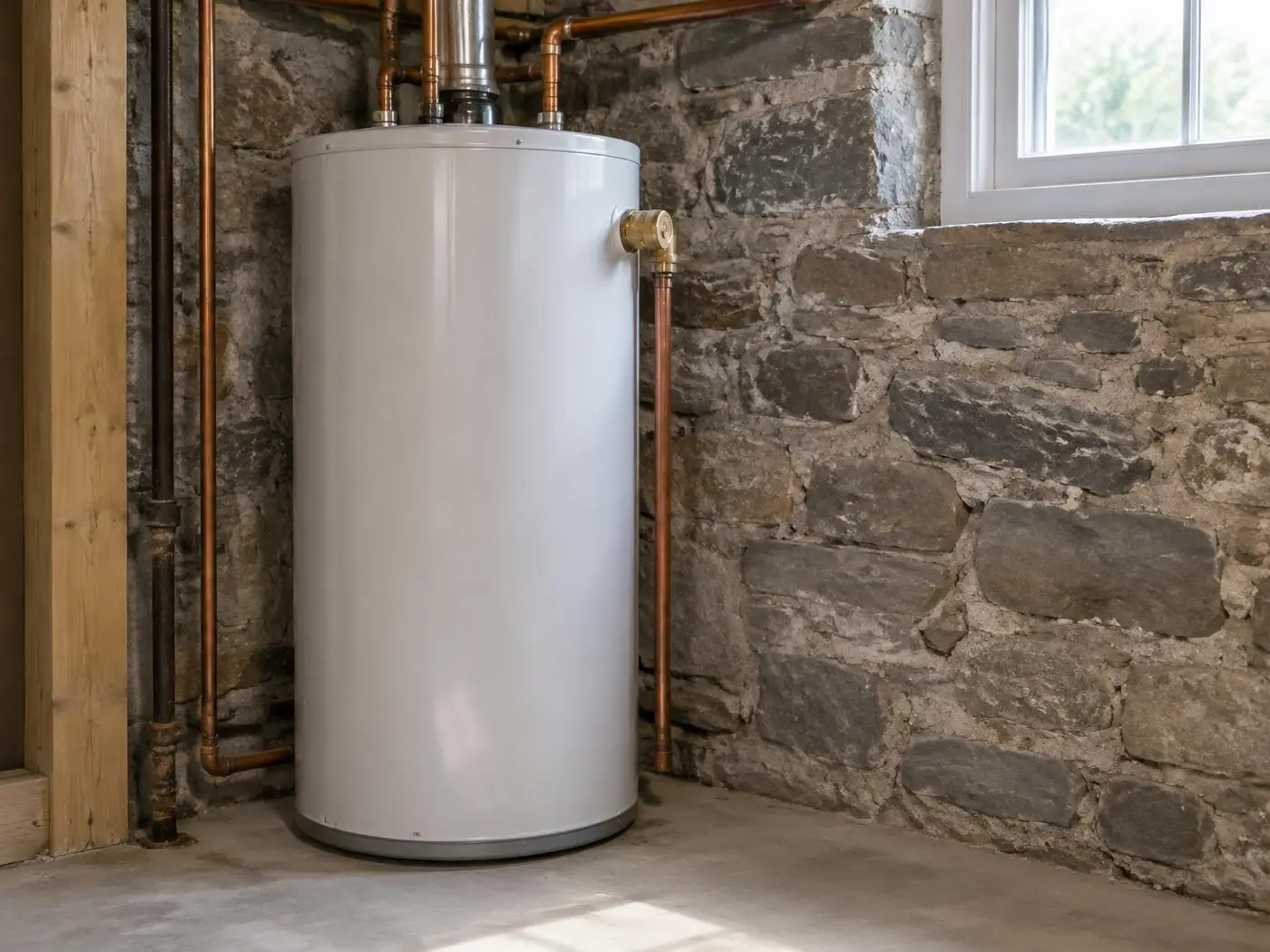
Leaks at the top often come from supply connectors, dielectric nipples or the anode port. Drain valves at the bottom can weep. If water is coming from under the jacket or the base and the tank is wet inside the burner area, the tank itself has likely failed and replacement is the realistic option.
Utility-room location and flood prep
Check where your heater sits. If it's in a closet, garage or room without a floor drain, a drain pan and leak sensor may be worth discussing once the immediate problem is handled.
If your utility room is in a lower level that can take on water during coastal storms, the Town of Plymouth's climate action plan includes a coastal adaptation action you can review. It's general town guidance, not an assessment of your home; ask our plumbers about equipment placement if flooding is a concern for your property.
Official reference: Plymouth Climate Action: coastal adaptation action HSP.2.1.A
Questions we hear
- My relief valve is dripping. Should I cap it?
- No. Never cap, plug or remove a T&P discharge pipe. It's a safety device. A dripping valve needs diagnosis of pressure, temperature and the valve itself.
- Can a leaking tank be patched?
- A leak from the tank shell itself cannot be reliably repaired. Fittings, valves and connectors can. Our plumbers confirm the source before recommending repair or replacement.
- Is it safe to keep using hot water while it leaks?
- If it's a slow fitting drip and there's no electrical or gas hazard, possibly for a short time. If water is pooling, shut off the cold supply and contact us.
- Does a leak always mean replacement?
- No. Leaks can originate from valves, connectors or condensation. Replacement is only recommended when the tank itself has failed or repair isn't sensible given condition.